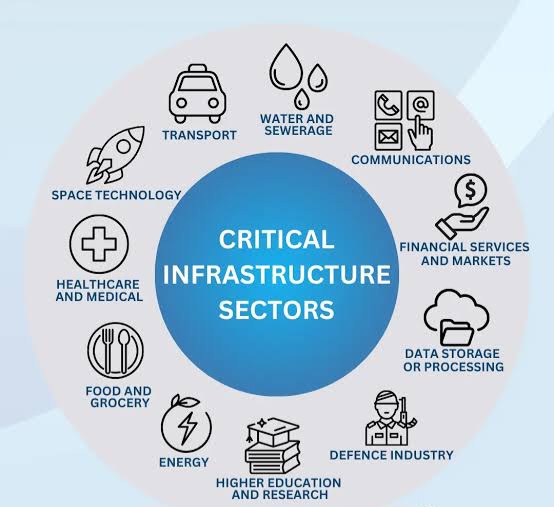
PRESS STATEMENT The Center for Consumer Concern and Awareness Initiative (CCCAI) acknowledges the grave and recurring challenge posed by the vandalism and sabotage of critical national infrastructure in Nigeria, particularly assets now designated as Critical National Information Infrastructure (CNII) under the CNII Order 2024. There is no dispute that attacks on CNII disrupt businesses, inflate service costs, undermine investor confidence, weaken national security, and impose severe burdens on consumers. These acts threaten Nigeria’s digital economy, ease of doing business, and the quality of life of millions of citizens. However, CCCAI strongly disagrees with the recent call by Mr. Bayo Onanuga advocating the death sentence for individuals involved in infrastructure vandalism. Otherwise, can we also call for death penalty for public office holders who drop the ball? While the outrage over persistent sabotage is understandable, the adoption of capital punishment as a policy response is disproportionate, counterproductive, and inconsistent with modern governance, consumer protection, and human rights standards. Our Position First, deterrence is not achieved by extreme punishment alone. Evidence from multiple jurisdictions shows that certainty of detection, swift prosecution, and consistent enforcement are far more effective deterrents than the severity of penalties. Nigeria’s core challenge lies not in the absence of harsh laws, but in weak enforcement, intelligence gaps, and limited community ownership of infrastructure assets. Second, infrastructure vandalism is often driven by economic desperation, unemployment, ignorance, and organised criminal networks. Executing low-level offenders will not dismantle the financiers, collaborators, and systemic failures that enable these crimes. Third, framing infrastructure protection solely through a punitive lens ignores the consumer dimension of CNII disruption. Consumers suffer higher tariffs, poor service quality, and reduced access when infrastructure fails. The solution must therefore prioritise prevention, resilience, and accountability, not irreversible punishment. A Better Path Forward CCCAI advocates for a balanced, effective, and lawful approach, including: Robust enforcement of existing criminal laws with long custodial sentences where appropriate; Specialised CNII protection units and fast-track prosecution mechanisms; Public awareness campaigns linking infrastructure vandalism directly to consumer harm; Community-based protection and reporting frameworks; Stronger collaboration among regulators, service providers, civil society, and citizens through platforms such as the Trusted Information Sharing Network (TISN). Conclusion Protecting critical infrastructure is essential to Nigeria’s national security, economic growth, and consumer welfare. However, justice must be firm, not fatal. A society that responds to infrastructure sabotage with execution risks undermining the very rule of law and social trust it seeks to protect. Nigeria can secure its infrastructure without sacrificing proportionality, human dignity, or good governance. Signed: Center for Consumer Concern and Awareness Initiative (CCCAI)

CCC-AI calls for sanction against consumer complaint neglect by businesses/service providers
PRESS STATEMENT The Centre for Consumer Concern, Awareness and Initiatives (CCC-AI) has observed a persistent trend where businesses and service providers create a systemic wall of silence around consumer communication, complaints and enquiry, preventing quick and satisfactory resolution. The Center believes that organizations deliberately ignoring hapless consumers and leaving legitimate grievances unresolved for years reflects a weak system that favors only the powerful and influential in society. At its worst, this is a consumer attrition by design, fueled by regulatory laxity and a culture of impunity. We state that organisations that engage in these practices deliberately wear down consumers emotionally and financially while avoiding accountability. The CCC-AI states unequivocally that timely response to consumers complaints and their satisfactory resolution is a right that organisations must fulfil — not in breach, but in full compliance. This must also be accompanied by respectful engagement and transparency in the decision-making process for achieving resolution. It is clear that organizations that collect deposits, hold collateral, provide essential services, or manage consumer assets have a duty of care, not just profit. Our Demands The CCC-AI calls on regulators to treat unjustified non-responsiveness as a regulatory breach. We also urge regulators to enforce clear response-time obligations and sanction institutions that repeatedly ignore consumer complaints. Our Centre urges organisations/businesses to treat consumer communication not as a favour, but as part of legal and ethical obligation. We equally urge businesses to establish transparent, timely, and accessible complaint-handling systems.

CCC-AI public health alert contaminated SMA infant formula from the UK
Press Statement The Centre for Consumer Concern, Awareness and Initiative (CCC-AI) is issuing an urgent public health warning to parents, caregivers, healthcare providers, and retailers on the global recall of batches of contaminated SMA Infant and Follow-On Formula, produced by Nestlé UK & Ireland. These products, some of which must have entered the Nigerian market through independent importers and grey-market channels, are contaminated with Cereulide — a dangerous toxin produced by Bacillus cereus. Contrary to the notion that using boiled water while preparing the affected infant foods would automatically neutralise the toxins, the CCC-AI states unequivocally that this is false. As a fact, Cereulide is extremely heat-resistant, and infants who consume contaminated formula risk suffering food poisoning, regardless of the preparation method adopted. Health rsks to infants Symptoms may occur within 30 minutes to 5 hours, including: Severe vomiting Rapid dehydration (potentially life-threatening within hours) Electrolyte imbalance and extreme lethargy Possible mitochondrial damage from repeated or high exposure We are urging parents whose babies might have consumed SMA products in recent times to seek urgent medical examination What to do CHECK YOUR TINS IMMEDIATELY Look for the batch number printed on the base of the tin or side of liquid packs. If your product matches any of the below, then DO NOT USE IT! ⚠️ AFFECTED PRODUCTS & BATCH CODES 53230295M 52870295M 53030295M 53040295M 53070295M 53080295M SMA First Infant Milk 70ml 53170742B1 SMA Lactose Free 400g 51150346AB 51500346AB 51719722BA 51759722BA 51829722BA 51979722BA 52109722BA 53299722BA 53459722BA SMA Anti-Reflux 800g 51570742F3 52099722BA 52099722BB 52739722BA ALFAMINO 400g 51200017Y3 51210017Y1 51220017Y1 51250017Y1 51390017Y1 51420017Y2 51430017Y1 51460017Y1 51690017Y2 51690017Y3 51700017Y1 51710017Y1 51740017Y1 52760017Y5 52790017Y1 52860017Y1 53100017Y3 53110017Y1 53140017Y1 53140017Y2 53150017Y1 SMA First Infant Milk 800g 51590346AB 52750346AE SMA Advanced First Infant Milk 800g 51450742F1 SMA Advanced Follow-On Milk 800g 51240742F2 51890742F2 SMA Comfort 800g 52620742F3 SMA First Infant Milk 200ml 53070295M 52860295M 52870295M 53220295M 53230295M SMA GOLD PREM 2 — 800g 53090742F2 SMA LITTLE STEPS First Infant Milk 800g 51540346AD SMA Alfamino (additional affected lots) 51200017Y3 51210017Y1 51250017Y1 51460017Y1 51710017Y1 ADVISORY TO STAKEHOLDERS The CCC-AI warns retailers and online vendors that under the FCCPA (2018) the selling of hazardous or recalled products is illegal. We therefore urge them to stop the sale of the recalled products if still in their stock. We also advise retailers to report inventory of the affected stock to relevant authorities. Similar to this, we are calling on the National Administration for Food, Administration and Control (NAFDAC) and consumer protection agencies to immediately comb the Nigerian market for the affected products and effect seizure wherever found. In the same vein, we advise NAFDAC to carry out “hold and test” directive at all ports for UK-sourced dairy imports. In conclusion, the CCC-AI warns that the safety of Nigerian infants is non-negotiable. Products deemed unsafe abroad must not become acceptable here. Nigerian babies deserve the same level of protection as babies anywhere in the world.

CCCAI Urges Tinubu, FCCPC To Tackle Rising Prices of Consumer Goods
The Centre for Consumer Concerns and Awareness Initiatives (CCAI) has expressed concern over the series of engagements on exploitative pricing of consumer goods, organised by the Federal Competition and Consumer Protection Commission (FCCPC). The Center is afraid that the stakeholder’s engagement may fail to achieve its goal. As a vocal consumer protection organisation, the CCCAI has relentlessly campaigned against consumer exploitation in our economy’s retail and service sectors, while also advocating for a multi-stakeholder approach to the issue. We recall that the FCCPC held a similar conversation on fair pricing in 2023, which yielded no practical results. One prominent cause for this was the FCCPC’s failure to form a steering committee consisting of both governmental and not-for-profits to execute the proposed solutions. After observing the latest stakeholder engagement in Lagos, we feel it may end in the same way the previous one did. On this point, the CCCAI notes that the current price inflation affecting consumer products and services is intolerable, and it urges the Federal Government and the FCCPC led by Mr. Olatunji Bello to take decisive measures to combat it. It is well known that truck drivers transporting food and other supplies endure many extortions on our roadways from both state and non-state actors, while they continue to pay unlawful levies to unions and market leaders at the point of delivery. More concerning is the revelation by traders to our team that the tapestry of this extortion includes even traditional and community leaders. The market leaders’ aggressive reactions to a speaker at the Lagos edition of the FCCPC engagement exposed their complicity in price gouging, price fixing, and unlawful levy imposition. On the way forward, we ask President Bola Tinubu to demonstrate his commitment to ending the suffering of Nigerians by removing barriers to the free flow of agricultural produce and other consumer goods. For starters, we advise the government to impose price controls on some consumer goods. In addition, the FCCPC should facilitate a more robust and inclusive stakeholder forum, as well as a steering committee to carry out action plans. In doing so, the Centre asks the government to take the initiative in creating storage facilities while also ensuring increased electricity supply. To ensure a steady food supply, the federal and state governments should strengthen farmer’s cooperatives and others in the value chain by giving easy access to finance and enacting regulations that allow them to prosper. Similarly, we urge the government to implement strategic food reserve programs while increasing the ability of food processing enterprises throughout the food supply chain.

CCCAI hails suspension of Cybersecurity levy, urges corruption fight
PRESS STATEMENT The Center for Consumer Concerns and Awareness Initiative (CCAI), a not-for-profit dedicated to consumer protection, has welcomed the decision of President Bola Tinubu to suspend the implementation of the cybersecurity levy. The CCAI notes the President’s directive that the Central Bank of Nigeria should review the modalities for implementing the levy. Regardless of this, and as the Center had earlier expressed, imposing fresh taxes is an overkill on banking consumers, who already have had to endure several bank charges. We state unequivocally that a fresh tax burden will possibly discourage savings, frustrate the financial inclusion drive, and even undermine the CBN’s ballyhooed cashless policy. The Center urges the government to take into account current inflation in the economy, as well as the resulting rise in commodity prices, falling household incomes, and rising business costs, which have resulted in an unprecedented number of shutdowns. As a corollary to the foregoing, we believe that even businesses to which the Cybersecurity levy originally applies, as stated in Section 44 (2)(a) of the Cybersecurity Act 2015, should be spared the trouble, else they will ultimately pass on additional costs to consumers in the form of higher service prices. Furthermore, based on a multi-jurisdictional comparative assessment of bank charges, the CCCAI discovered that Nigerian banking consumers are among the most taxed in the world, and they are the only ones who may face a cybersecurity tax. As a result, the Center urges the executive and legislative branches of government to examine the Cybersecurity Act objectively in order to protect suffering banking customers and businesses. We also advise the government to explore alternate financing options, fix resource leaks, and combat widespread corruption at all levels.
CCCAI Urges FG, CBN To Reverse Cybersecurity Levy On Banking Consumers
The Centre for Consumer Concern and Awareness Initiatives (CCAI), a not-for-profit committed to consumer protection, has taken specific notice of the newly introduced Cybersecurity levy of 0.5 per cent by the federal government and the Central Bank of Nigeria (CBN) on hapless bank customers in the country. We are appalled by the apparent insensitivity of the government and the CBN to implement this unacceptable levy, especially at a time like this when Nigerians and businesses are faced with economic hardship, rising inflation and production cost, and attendant high cost of living. The CCAI strongly believes that the ill-thought out policy of imposing on banking consumers such avoidable burden would impact cost of goods and services as businesses are wont to shift their cost to the consumers. At the same time, it troubles us that both the government, which allocates huge amount in public funds to security annually, and the banking system, which appears to be surviving on the miseries of customers through unjustified charges, are not able to make sufficient investments in technology needed to safeguard our cyberspace and the financial system. The CBN’s role in this saga leaves a bad taste in our mouths. We, instead, expect the CBN to perform its responsibility of ensuring that financial players, particularly money deposit banks and payment processors invest adequately in cybersecurity measures and to continually upgrade their infrastructure. Doing so definitely will protect customers’ deposits and shore up public trust. At this point, it is instructive to say that no central bank globally charges citizens for provision of cybersecurity. Therefore we view the National Cybersecurity Fund as anomalous; in as much as poor Nigerians are the ones to fund it. We, therefore, demand that the Central Bank of Nigeria restricts itself to initiating monetary policies and performing effectively its regulatory oversight in the financial sector. Apart from the foregoing, implementing the Cybersecurity levy tends to reverse the gains achieved so far on widening financial inclusion, as many financial services users may devise other means to avoid the cost of electronic banking, thereby creating a drastic customer churn for the banks themselves. Were this to be the case, the banking sector may experience layoffs, which altogether would worsen damning joblessness in the country. Based on the foregoing, we advise the federal government and the CBN to rescind the policy forthwith. We urge the national assembly to urgently review the Cybersecurity Act with a view to expunging Section 44 (2)(a) that imposes the obnoxious levy on Nigerians. Fola Ademosu Director, Media and Publicity CCAI